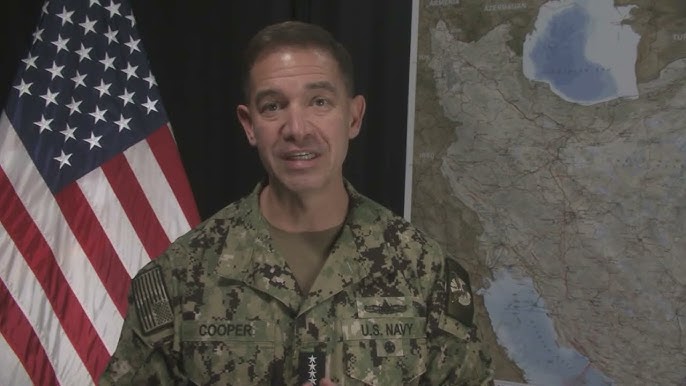
For the first time in nearly two weeks, the United States Central Command the military body overseeing American forces across the Middle East made no announcement of fresh military action against Iran on Friday night. The silence was deafening.
After 13 consecutive nights of relentless bombing campaigns targeting Iranian military infrastructure, the guns appeared to go quiet, leaving analysts, diplomats, and ordinary citizens around the world asking the same urgent question: is this the beginning of the end of one of the most intense military escalations the Middle East has seen in decades?
As of Saturday morning local time, Iranian state media had reported no new strikes, no fresh explosions, and no new casualties from American bombardment overnight. For a conflict that had become defined by its grim nightly rhythm of CENTCOM announcements and Iranian retaliatory fire, the sudden absence of news felt like a seismic shift in itself.
How We Got Here
To understand the significance of Friday’s silence, it is important to understand just how rapidly and dramatically this conflict escalated.
The roots of the 2026 US-Iran war stretch back to February 28, when the United States and Israel launched coordinated strikes against Iran. The opening salvo was devastating it took out Iran’s Supreme Leader Ali Khamenei, triggering an immediate and massive retaliatory response from Tehran in the form of hundreds of ballistic missiles and thousands of drones fired across the region.
A fragile ceasefire agreement a Memorandum of Understanding was eventually brokered in June 2026, aimed at reopening the critical Strait of Hormuz shipping lane and pausing hostilities. For a brief moment, the world exhaled.
But the peace did not hold.
Iran, seeking to assert what analysts described as hegemonic control over the Strait of Hormuz, began demanding that commercial vessels follow preapproved Iranian routes and pay fees to pass through the waterway. When ships refused to comply, Iran struck them. On July 6 and 7, three vessels were attacked in or near the strait, pushing President Donald Trump to declare the ceasefire dead.
“The truce is over,” Trump said on July 7. And with that, the bombs began falling again.
Thirteen Nights of Fire
What followed was one of the most sustained American bombing campaigns against a single nation in recent memory. For 13 consecutive nights, US Central Command posted on social media confirming fresh strikes on military targets across Iran. The targets included military bases, weapons storage facilities, missile launch sites, and key infrastructure that Washington argued was being used to threaten international shipping and American forces in the region.
Iran did not absorb the punishment quietly. Throughout the two-week campaign, Tehran launched ballistic missiles and drone attacks against American allies in the region. Bahrain, Kuwait, and Jordan all came under fire. Jordan bore a particularly heavy blow when, on July 17, two US service members were killed and one went missing in action marking the first American military fatalities from Iranian fire since March. Four additional service members were medically evacuated but later discharged. It was a moment that sent shockwaves through Washington and hardened the resolve of the Trump administration to press forward.
In total, nearly 100 US service members suffered some level of injury between July 7 and the current date, according to Pentagon figures, though officials were quick to note that 96 percent of those injured had returned to active duty. The Pentagon faced criticism during this period for being slow to publicly disclose the full scale of military injuries, with reports suggesting a deliberate effort to manage the information flow during an increasingly unpopular conflict.
On the Iranian side, the human cost was also mounting. Iran’s Health Ministry confirmed that US strikes killed at least 53 people since July 6, with nearly 600 others wounded. Beyond the physical destruction, the economic consequences inside Iran were becoming increasingly severe. Reports from Iranian media indicated that food prices had tripled since the start of the conflict, with the price of vegetable oil surging by over 400 percent and the cost of basic goods like eggs and chicken rising by similarly alarming margins.
The Strait of Hormuz The War’s Economic Fault Line
No single geographic feature has defined this conflict more than the Strait of Hormuz, the narrow waterway through which roughly 20 percent of the world’s oil supply passes daily.
Iran’s campaign to assert control over the strait triggered immediate consequences for global energy markets. Oil prices surged dramatically, with Brent crude breaking the $100 per barrel barrier a psychological and economic threshold that sent alarm bells ringing in capitals from Washington to Beijing to Brussels.
Shipping through the strait effectively ground to a halt. Data from analytics firms showed that while 32 ships passed through the waterway on July 10, that number dropped to zero by July 15 as Iran’s attacks on vessels intensified and the US imposed a naval blockade on Iranian ports. The United Arab Emirates, one of the region’s major oil exporters, resorted to hiring tankers to shuttle oil from inside the strait in an attempt to keep some supply moving to international markets.
Iran’s Islamic Revolutionary Guard Corps claimed responsibility for targeting vessels it described as non-compliant, though independent verification of many of these claims proved difficult. The US military, for its part, confirmed that it had disabled at least one tanker that attempted to bypass its blockade on Iranian ports.
The Houthi rebels in Yemen, emboldened by Iran’s resistance, announced a blockade of Saudi Arabia and launched fresh attacks on Saudi vessels in the Red Sea, prompting Saudi Arabia to conduct its own retaliatory strikes against Houthi positions. The conflict, which had begun as a bilateral US-Iran standoff, was increasingly drawing in the entire region.
Diplomatic Signals Amid the Silence
The most significant development accompanying Friday’s quiet was not military it was diplomatic.
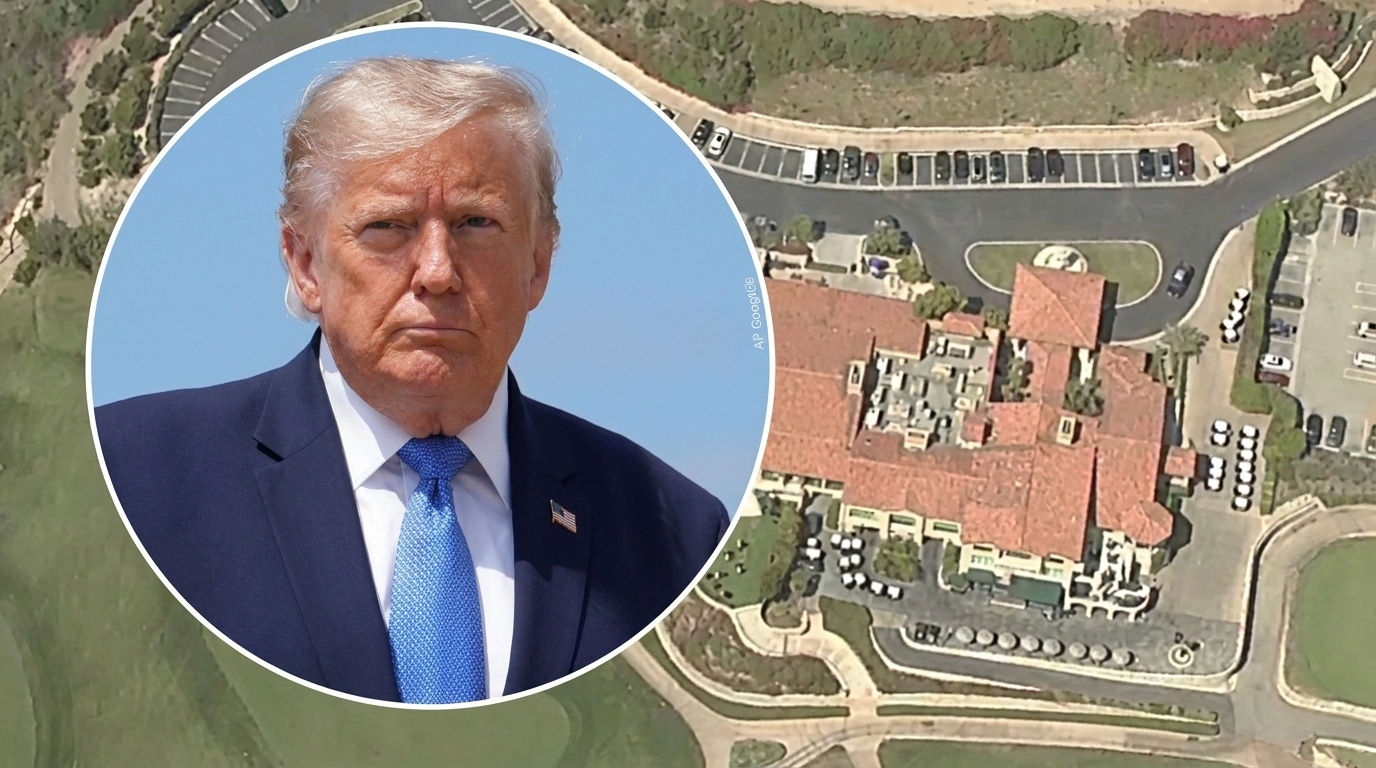
President Trump, speaking at the White House Correspondents’ Dinner on Friday evening, struck a notably different tone from his earlier bellicose statements. “It’s all going extremely well,” he told the assembled crowd, before pivoting to note that negotiations with Iran were ongoing. Speaking separately to reporters, Trump said he believed Tehran was “getting more serious” about reaching a deal.
Earlier on Friday, Trump met with top advisers and Cabinet officials to discuss the path forward, with sources telling CNN that a potential escalation was on the table if diplomatic efforts failed to bear fruit. Secretary of State Marco Rubio, who had been vocal about Iran’s destabilizing behavior throughout the conflict, was among those present at the discussions.
Adding a further diplomatic dimension, Iraqi Prime Minister Ali al-Zaidi traveled to Tehran on Thursday after meeting with Trump at the White House the previous week. Iranian Foreign Minister Abbas Araghchi acknowledged that al-Zaidi might be carrying messages from the Trump administration, though he was careful to insist that Iran was not actively seeking mediation. “The primary obstacle is the irrational, excessive, and hegemonic approach of the US,” Araghchi said in a statement to Iranian state broadcasting.
Whether the Iraqi prime minister’s visit will prove to be the diplomatic breakthrough that ends the conflict or merely another chapter in a long and bloody negotiation process remains to be seen.
The Political Cost at Home
Back in Washington, the war was beginning to carry a political price tag that some Republicans were growing uncomfortable with.
Senator Rand Paul, one of the most vocal critics of the military campaign within the GOP, warned bluntly that the Iran war could generate significant political backlash for Republicans ahead of the November midterm elections. “The Iran war has not been a success,” Paul told CNN. “By any objective measure, we’re worse off.”
Public polling appeared to support Paul’s concern. While Trump insisted that “Americans aren’t against the war,” surveys suggested a more complicated picture, with support for the military campaign softening as casualties mounted and oil prices hit levels not seen in years.
The Pentagon’s handling of casualty disclosures added another layer of controversy, with the New York Times reporting that the military had withheld information about dozens of injuries sustained by US service members during the conflict. Pentagon spokesperson Parnell pushed back against the characterization, insisting that the delays were intended to protect service members while next-of-kin notifications were made.
What Comes Next
As Saturday dawned with no new announcements from US Central Command and no reports of fresh explosions from Iranian state media, the world found itself in unfamiliar territory a moment of unexpected quiet in a conflict that had seemed to be accelerating toward something far darker.
Trump himself has acknowledged that Washington’s exit strategy could come either diplomatically or militarily. The diplomatic track, while fragile, appeared to be gaining momentum on Friday. But experienced observers of US-Iran relations have learned to treat moments of apparent calm with caution. The ceasefire of June 2026 collapsed within weeks.
Whether this pause represents a genuine turning point toward peace, a strategic repositioning before a new phase of military action, or simply the fog of a conflict in which even silence carries uncertainty only the coming hours and days will tell.
What is certain is that the world is watching. The Strait of Hormuz remains closed to normal traffic. Oil prices remain above $100 a barrel. Hundreds of thousands of people across the Middle East remain in harm’s way. And somewhere in the space between Washington and Tehran, diplomats are racing against time to find a way out before the guns start again.