dr. trump AI video: 7 facts about the deepfake controversy nobody expected
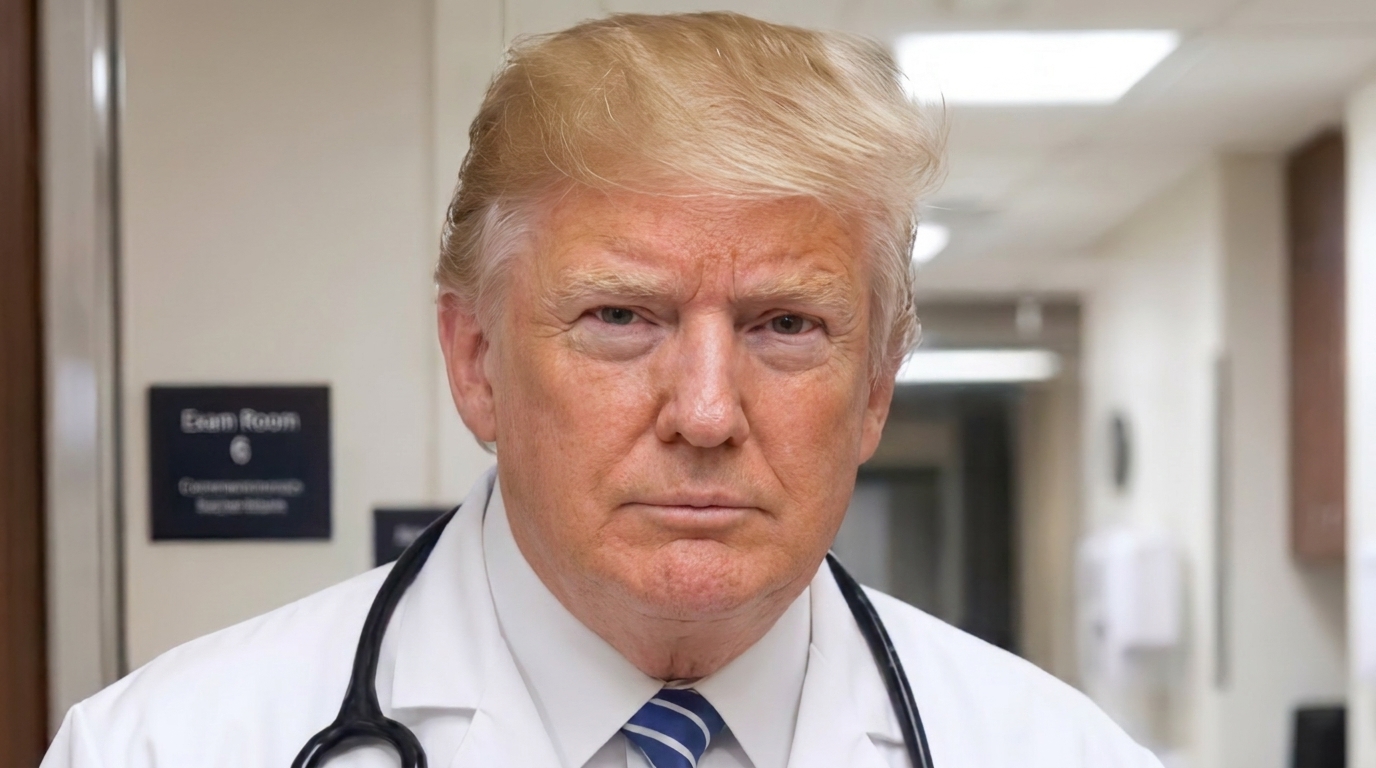
President Trump posted one of his most bizarre social media moments yet late Wednesday night: a roughly 90-second AI-generated video depicting himself as “Dr. Trump,” a physician curing celebrities of “Trump Derangement Syndrome.” The dr. trump AI video used deepfake likenesses of six real, non-consenting public figures, and it arrives against a backdrop that makes the joke considerably darker than it first appears.
what the video actually shows
The dr. trump AI video opens with an AI-generated version of the president dressed in a white lab coat embroidered “Donald J. Trump, M.D.” with a stethoscope around his neck. “Have you or someone you know been diagnosed with TDS? The symptoms can be relentless. Fortunately, I’m Doctor Trump, and I have a treatment plan,” the AI Trump says, before introducing a series of fake celebrity “patients.”
# the six people deepfaked without consent
The dr. trump AI video features fabricated testimonials from Rosie O’Donnell, Whoopi Goldberg, Robert De Niro, Julia Roberts, Edward Norton, and John Leguizamo, none of whom appear to have consented to being depicted or given any statement resembling the words put in their mouths by the video. The fake De Niro says he “couldn’t eat, couldn’t sleep, constantly angry,” while the fake Roberts claims she has “aged 20 years in the last two years” and worries about her future.
the “prescription” at the end
The dr. trump AI video closes with the AI Trump character prescribing a cure for the fictional condition: “Turn off fake news. Say your prayers, and if you ever feel anxious, just have a Diet Coke like me, and you’re gonna see a remarkable difference in your life.”
why trump treats “TDS” as more than a joke
What separates the dr. trump AI video from typical political trolling is that Trump has publicly suggested he genuinely believes “Trump Derangement Syndrome” is a real medical condition. At a White House event in May, he told reporters, “I’m hearing it is actually a disease,” according to Mediaite reporting.
the rob reiner connection that darkens the joke
The dr. trump AI video’s comedic framing sits uneasily against a real tragedy from just months earlier. After director Rob Reiner and his wife Michele were murdered in December, Trump wrote on Truth Social that Reiner had died “reportedly due to the anger he caused others through his massive, unyielding, and incurable affliction with a mind crippling disease known as TRUMP DERANGEMENT SYNDROME.” Using a real person’s violent death to promote a fictional disease, then months later making a comedy sketch about “curing” the same condition in living celebrities, is the detail generating the most serious criticism of the dr. trump AI video.
why these six specific celebrities
Every person featured in the dr. trump AI video has a documented history of public criticism of the president. De Niro has called Trump “an existential threat to our freedoms and security.” Goldberg said during the 2024 campaign that Trump wanted to be “a dictator for life.” O’Donnell and Trump have feuded publicly for roughly two decades. Roberts narrated a pro-Harris voter outreach ad during the 2024 election, when she ran against Trump.
not his first AI controversy
The dr. trump AI video is part of a documented pattern of behavior. Earlier this year, Trump posted, then deleted after bipartisan backlash, an AI video depicting former President Barack Obama and Michelle Obama as apes. When questioned by reporters about that video, he said, “I liked the beginning. I saw it and just passed it on, and I guess probably nobody reviewed the end of it.” He did not apologize for the post.
what comes next
As of this reporting, representatives for the six celebrities featured in the dr. trump AI video have not issued public statements responding to the video. Legal experts note that using AI likenesses of real, identifiable public figures without their consent occupies an unsettled area of both defamation and right-of-publicity law in the United States, particularly when the depicted statements could be seen as putting damaging or embarrassing words in someone’s mouth that they never actually said. Whether any of the six pursue legal action remains to be seen, though celebrities have increasingly explored legal remedies against unauthorized AI likenesses in recent years as the technology has become more widely used in political and commercial contexts alike.
Sources: Variety.com, HollywoodReporter.com, Forbes.com, Mediaite.com, NewRepublic.com July 2 to 3, 2026