A century-old public park in Washington, D.C. has become the center of a legal and political fight over cherry trees, toxic dirt, and one man’s vision for a championship golf course. The East Potomac golf course redesign has drawn a federal lawsuit, a judge’s warning, and growing criticism over what a leaked blueprint reveals will disappear if the project moves forward. Here’s what’s actually happening.
The park is protected by a 128-year-old law
East Potomac Park has been federally protected since 1897, when Congress reserved the land “for the recreation and pleasure of the people.” The East Potomac golf course redesign is now being challenged specifically because critics argue it violates the spirit and letter of that original act.
Leaked blueprints show far more than a facelift
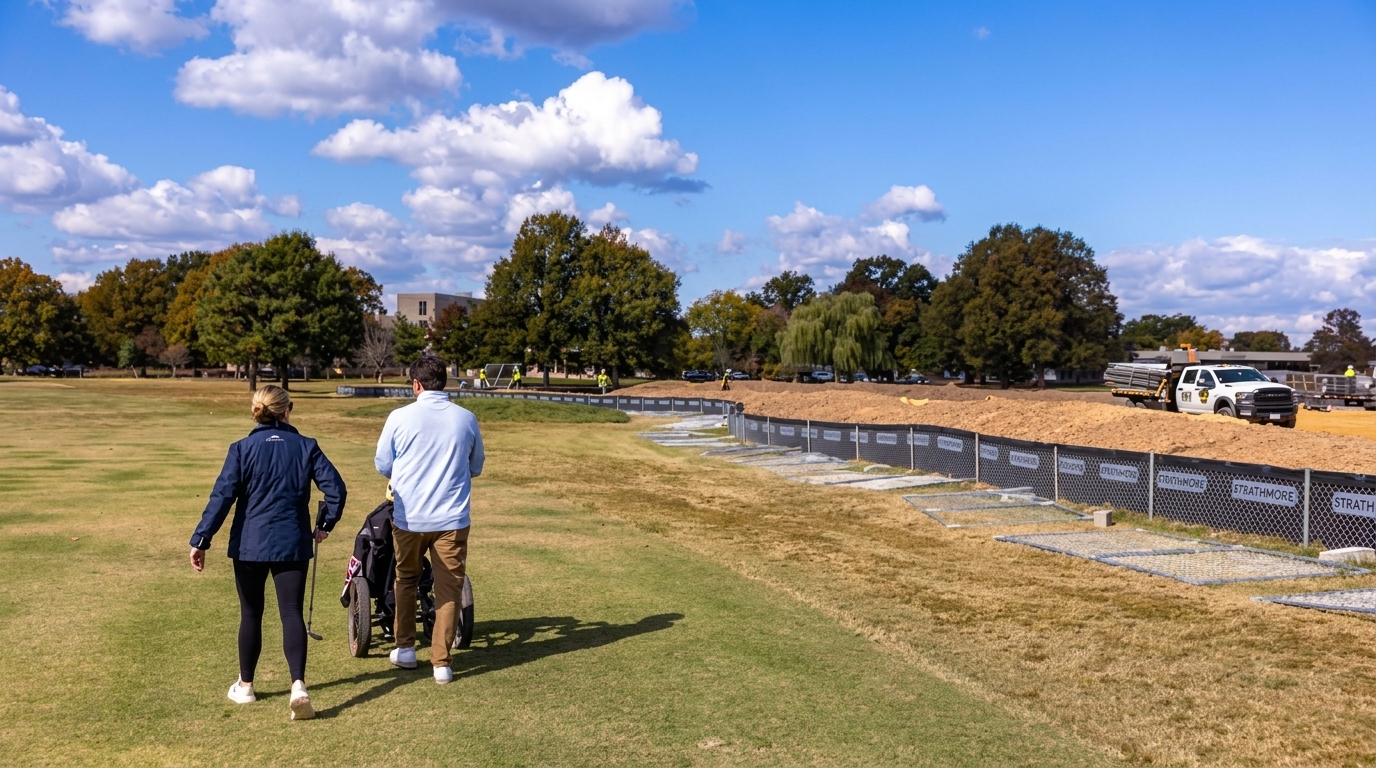
Photos from a June tour showed design plans that go well beyond fixing “dilapidated” greens. The East Potomac golf course redesign, as photographed, would shrink the property from its current three courses and 36 holes down to a single 18-hole championship course, eliminating a riverside bike trail and a mini golf course that has operated since 1931.
Historic cherry trees are on the chopping block
Among the biggest flashpoints in the East Potomac golf course redesign is the planned removal of a grove of cherry trees gifted to the United States by Japan in 1910, predating the more famous Tidal Basin cherry trees planted a few years later. The trees are considered part of the historic fabric of the park.
A lawsuit was filed before construction even started
In February, the D.C. Preservation League and two local residents sued the Department of the Interior, the National Park Service, and Interior Secretary Doug Burgum over the East Potomac golf course redesign, arguing it violates federal environmental and historic preservation law.
A federal judge has already issued a warning
A U.S. district judge pressed the administration for more details on the plan and warned there would be “serious consequences” if major construction began without proper notice to the court. The judge did allow basic maintenance to continue while the East Potomac golf course redesign case proceeds.
Toxic soil from an unrelated project was dumped on the site
Separately, Democrats in Congress raised concerns after more than 30,000 cubic yards of excavated soil from the White House East Wing ballroom demolition were transported to and stockpiled on the East Potomac property. Court filings cited by plaintiffs say government soil testing raised concerns about lead, mercury, arsenic, and other carcinogens on the same land now slated for the East Potomac golf course redesign.
No public price tag has been released
Despite court filings referencing plans to raise as much as 150 million dollars in private and charitable contributions, the administration has not released a firm public cost estimate for the East Potomac golf course redesign, leaving open questions about how much taxpayer-funded staff time, environmental review, and infrastructure spending will ultimately be tied to the project.
Why this story matters beyond one golf course
The East Potomac golf course redesign has become a flashpoint precisely because it touches so many separate issues at once: historic preservation, environmental safety, government transparency, and who a public park protected by federal law is actually supposed to serve. Whether the project proceeds as photographed in the leaked blueprints or gets scaled back through ongoing litigation, the case has already forced new scrutiny onto how public land and taxpayer-adjacent resources get repurposed for large-scale personal projects.
Source: washingtonpost.com, gearjunkie.com