The Supreme Court Just Handed Weed Smokers a 9-0 Victory on Gun Rights Here’s What Nobody Is Explaining
On June 18, 2026, something happened in Washington that almost nobody saw coming especially not the way it unfolded.
The United States Supreme Court ruled unanimously all nine justices, conservatives and liberals alike that the federal government cannot strip Americans of their marijuana gun rights simply because they smoke weed. The ruling, in United States v. Hemani, doesn’t just affect one man in Texas. It potentially reshapes the legal landscape for tens of millions of Americans who own firearms and use marijuana in states where it’s fully legal.
Here are 9 facts about this marijuana gun rights Supreme Court ruling that every American needs to understand.
1. The Case Started With an FBI Terrorism Investigation Not a Drug Bust
Most coverage is missing the full story of how Ali Hemani ended up at the Supreme Court.
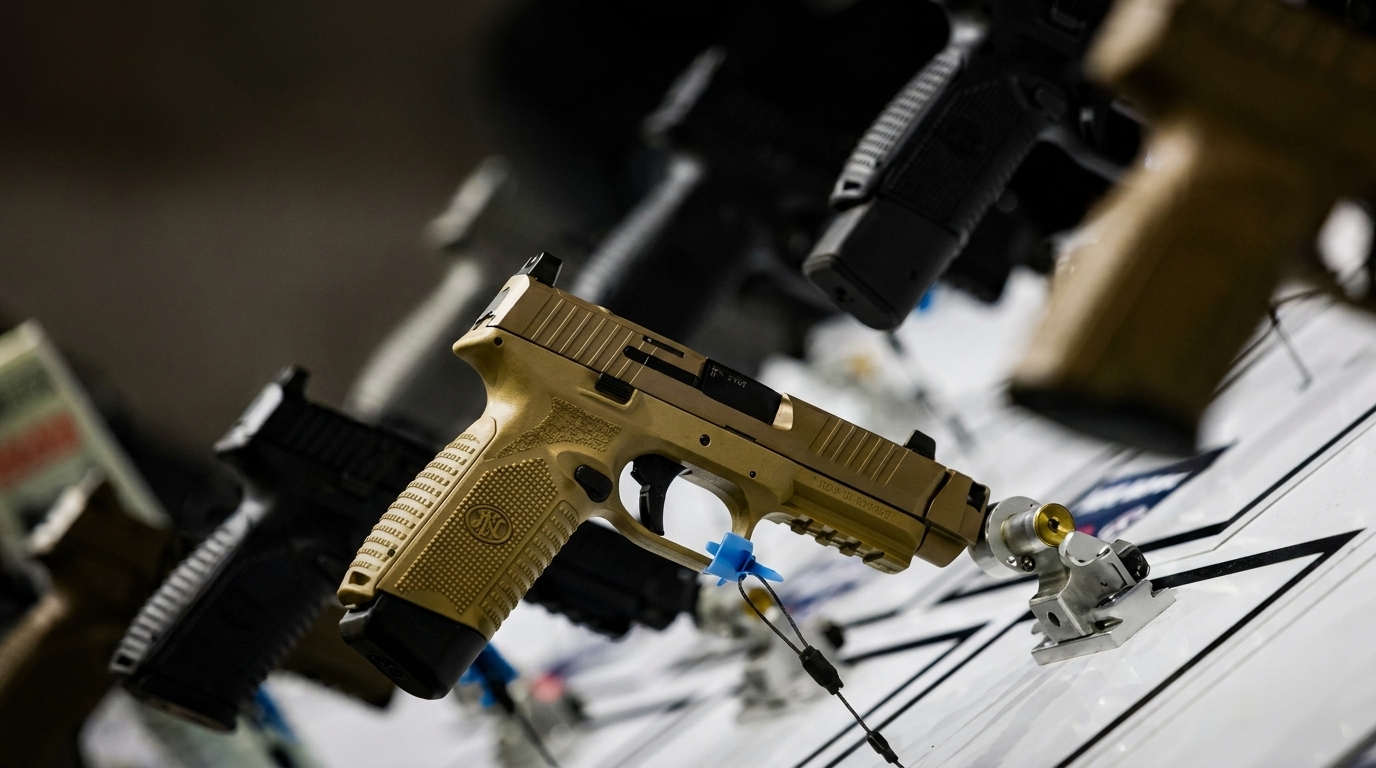
In 2022, the FBI suspected Hemani and his family of terrorism-related activities. Agents searched his home in Dallas, Texas. They found a legally purchased Glock 9mm pistol, 60 grams of marijuana, and a small amount of cocaine.
Here’s the twist: the government never charged him with terrorism. Never charged him with drug trafficking. Never even argued he was a danger to anyone.
Instead, six months after the search, prosecutors hit him with a single charge owning a gun while being a marijuana user under a 1968 federal law called 18 U.S.C. §922(g)(3). That charge alone carried up to 15 years in prison and a lifetime ban on owning firearms.
The marijuana gun rights question went all the way to the nation’s highest court because of what the government claimed: that smoking weed automatically makes someone too dangerous to own a gun. Nine justices disagreed.
2. The Same Law Was Used to Convict Hunter Biden
The marijuana gun rights Supreme Court case has a famous connection that made it impossible to ignore politically.
The exact same federal statute 18 U.S.C. §922(g)(3) was used to convict Hunter Biden in June 2024 for possessing a gun while being a drug user. President Biden later pardoned his son before leaving office.
The Hunter Biden case made this law nationally famous. Now, the Supreme Court has effectively said that law, as applied to people who aren’t proven to be actively dangerous, is unconstitutional. Biden’s pardon meant the ruling doesn’t change his case but the political irony is impossible to miss.
3. Trump’s Own Justice Department Was Defending the Gun Ban And Lost
Here’s where the marijuana gun rights ruling gets politically complicated for everyone.
The Trump administration’s Department of Justice argued in court that the federal gun ban on drug users should be upheld. Trump’s DOJ claimed the law was historically similar to 19th-century statutes that temporarily disarmed “habitual drunkards.”
Justice Neil Gorsuch a Trump appointee wrote the majority opinion and rejected that argument directly. Gorsuch said the historical “habitual drunkard” laws were fundamentally different because they required judicial process and targeted incapacitated individuals, not simply people who used a substance.
Gun rights advocates who had long complained that the Trump administration wasn’t living up to its Second Amendment promises pointed to this case as proof. The administration that campaigned on gun rights went to court to defend a law stripping gun rights from millions and got slapped down 9-0 by its own judicial appointments.
4. The Ruling Protects Tens of Millions of Americans
The scale of the marijuana gun rights Supreme Court decision is staggering when you look at the numbers.
According to the ACLU, which represented Hemani, the old law gave the federal government a theoretical power to prosecute tens of millions of Americans who own firearms and regularly use marijuana. Nearly half of all US states have now legalized recreational marijuana. Forty states allow medical use.
The ACLU’s legal director Cecillia Wang put it plainly after the ruling: the decision protects the rights of millions and stops the government from using arbitrary assumptions to strip constitutional rights.
Before this ruling, every gun-owning marijuana user in a legal weed state was technically committing a federal felony every day. That legal cloud has now been lifted at least for users who are not actively intoxicated or demonstrably addicted.
5. The NRA and the ACLU Were on the Same Side
You won’t see this happen often.
The marijuana gun rights case produced one of the most unusual political coalitions in recent Supreme Court history. The National Rifle Association and the American Civil Liberties Union two organizations that agree on almost nothing both argued that the federal gun ban on drug users was unconstitutional.
Meanwhile, the Trump administration found itself on the same side as gun control organizations like Brady and Giffords, who argued that striking down the law would make it harder to keep guns out of dangerous hands.
The political left-right map on this ruling was completely scrambled. That’s part of what makes the marijuana gun rights Supreme Court decision so uniquely significant it doesn’t fit neatly into either party’s talking points.
6. Justice Gorsuch’s Opinion Called Out the Government’s “Ambitious Theory”
The language Justice Gorsuch used in the majority opinion was striking and worth paying attention to.
Gorsuch wrote that the government was operating on an “ambitious theory” the idea that anyone who regularly uses marijuana is automatically categorically dangerous without any further showing of actual danger. The court rejected that logic entirely in this marijuana gun rights case.
Gorsuch pointed out the absurdity of the government’s position: under their theory, a husband who occasionally takes his wife’s prescription Ambien, or a college student who uses a friend’s Adderall to study, could also be charged under the same law and face 15 years in prison. The drug didn’t matter. The amount didn’t matter. The effect on behavior didn’t matter.
That, the court said unanimously, was a constitutional bridge too far.
7. The Ruling Is Narrow Bigger Questions Are Still Coming
Before anyone declares total victory, it’s important to understand what the marijuana gun rights Supreme Court ruling did NOT decide.
The court explicitly left open several questions:
- Can the government still ban guns for people who are actively intoxicated while armed?
- Can addicts not just regular users still be prosecuted?
- What about people whose drug use has been proven to make them actually dangerous?
Georgetown law professor Steve Vladeck told CNN the court went out of its way to avoid the bigger questions but those questions are coming back. Future cases will push the boundaries of this ruling, and the court will eventually have to answer them.
8. Marijuana Was Reclassified During the Case Itself
Here’s a detail that almost every news outlet buried.
While the Hemani case was being argued, the federal government quietly moved some marijuana products from Schedule I the most restricted category, alongside heroin down to Schedule III, which includes drugs with accepted medical uses and lower abuse potential.
Gorsuch noted this shift directly in the majority opinion. The federal government was simultaneously arguing in court that marijuana users are too dangerous to own guns while its own agencies were acknowledging marijuana is less dangerous than previously classified.
That internal contradiction, the court noted, made the government’s position even harder to defend in the marijuana gun rights ruling.
9. This Ruling Is the Direct Result of a 2022 Decision That Changed Everything
The Hemani case didn’t happen in a vacuum. It’s the latest chapter in a major legal revolution that started with a 2022 Supreme Court ruling called Bruen.
In Bruen, the conservative majority established a new test: any gun regulation must be consistent with the historical tradition of firearm regulation at the time the Second Amendment was written. That ruling triggered a wave of legal challenges to gun laws across the country.
Hemani is the marijuana gun rights Supreme Court outcome of that wave. And legal analysts say the Bruen framework will keep producing similar results as courts are forced to ask whether laws written in the 1960s, 1980s, and 1990s can survive a constitutional test rooted in 18th-century history.
The answer, increasingly, is no.
What Happens Nex
The Hemani ruling doesn’t mean weed smokers can walk into a gun store tomorrow with zero concerns. Federal marijuana prohibition still exists. Background check systems haven’t changed overnight. And prosecutors can still potentially target users who are actively dangerous.
But the marijuana gun rights Supreme Court decision is a landmark shift. For the first time, the nation’s highest court has said clearly: using marijuana alone without any proof of actual danger is not enough reason to strip an American of a constitutional right.
Fifty million regular marijuana users in this country just got a ruling they didn’t expect. What comes next will depend on Congress, the states, and the next wave of cases already working their way through the courts.
Sources: Supreme Court Opinion (United States v. Hemani, June 18, 2026), NPR, CNN, ABC News, NBC News, ACLU, Wikipedia