A tense weekend between the United States and Iran has turned the Strait of Hormuz into the center of a fight that reaches far beyond the Middle East. The Strait of Hormuz dispute escalated fast, with both countries giving contradicting accounts of whether the waterway is even open, and financial markets already reacting to the uncertainty. Here’s a full breakdown of what happened and why it matters.
The US carried out two major waves of strikes in 48 hours
The US military said it hit approximately 140 Iranian military sites overnight Saturday into Sunday, then returned with a second wave of strikes hitting dozens more targets Sunday into Monday. According to US Central Command, the targets included Iranian air-defense systems, coastal radar sites, missile and drone capabilities, and small boats operating near the Strait of Hormuz.
Iran responded by targeting three US allies at once
In the hours following the US strikes, Iran launched drone and missile attacks toward American bases in Bahrain, Kuwait, and Jordan. Jordan’s military said it intercepted and shot down four Iranian missiles that had entered the country’s airspace, while Bahrain activated sirens and Kuwait reported dealing with what it called hostile aerial targets.
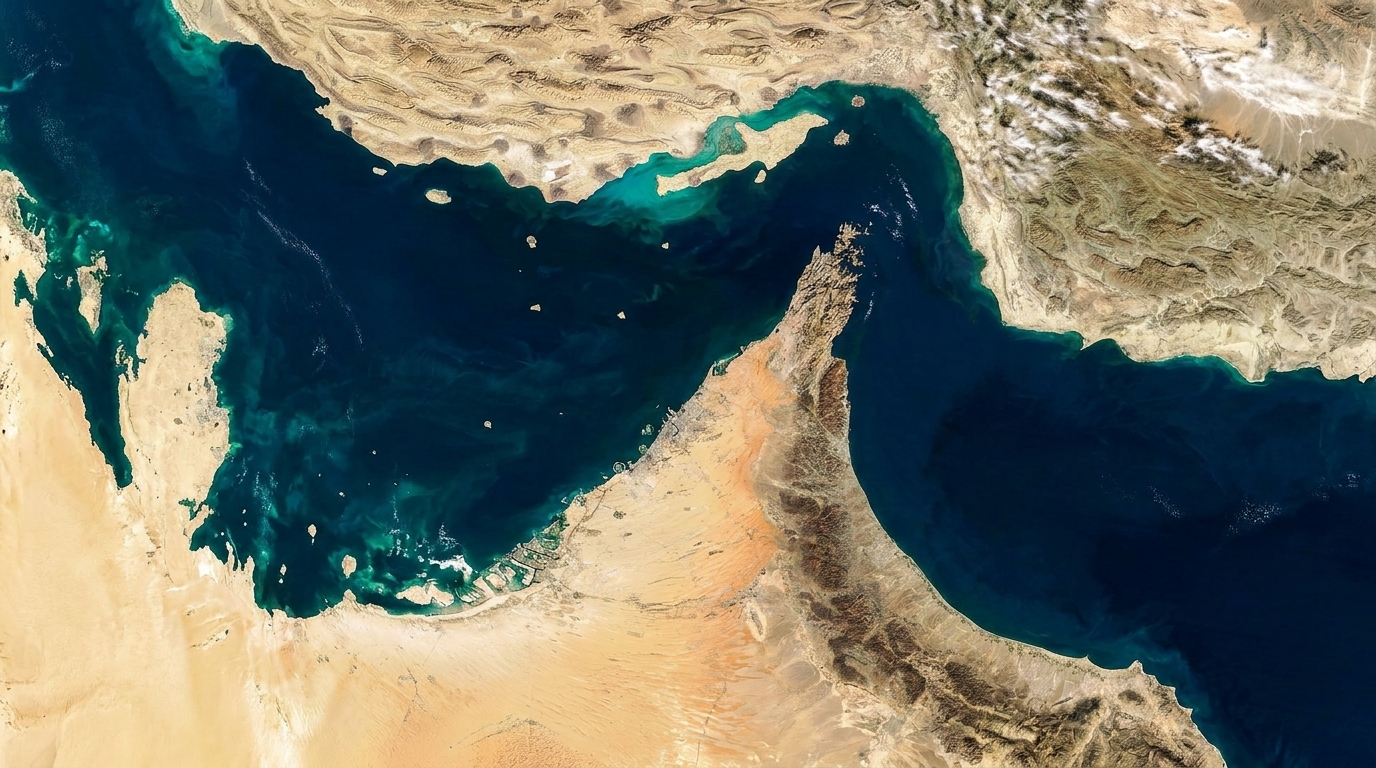
The Strait of Hormuz is where this fight actually centers
Much of the tension around the Strait of Hormuz stems from Iran’s Islamic Revolutionary Guard Corps firing a warning shot at a commercial vessel attempting to cross through an unauthorized route. Iran then declared the entire waterway closed, a claim its maritime authority later reinforced by saying passage was “not possible” until stability returns.
The US insists the waterway remains open
US Central Command directly disputed Iran’s Strait of Hormuz closure claim, stating that the passage “is a vital maritime corridor for global trade” and that “Iran does not control it.” President Trump echoed that position in a CNN interview, saying plainly that the strait is “open as far as we’re concerned.”
Roughly a fifth of global oil shipments pass through here
The Strait of Hormuz carries an enormous share of the world’s seaborne oil trade, which is exactly why any dispute over its status ripples through energy markets almost instantly. Even a partial disruption to a passage this critical can meaningfully affect fuel costs for consumers well outside the region.
Oil prices jumped within a single weekend
Brent crude climbed nearly 4 percent to just under 79 dollars a barrel, while US crude rose a similar amount, following the weekend’s strikes and the Strait of Hormuz closure announcement. Analysts described the increase as comparatively mild given the severity of the news, partly because Trump’s public insistence that the strait remains open helped ease market fears of a full-blown shipping crisis.
Ship traffic still dropped sharply despite the disagreement
Regardless of who is technically right about the Strait of Hormuz status, tracking data showed vessel traffic through the waterway slowed to a trickle over the weekend. Shipping companies appear to be erring on the side of caution even as US and Iranian officials continue to give conflicting public statements.
This threatens a fragile 60-day negotiation window
The current flare-up arrives as the US and Iran are roughly at the halfway point of a 60-day window meant to hammer out the final terms of a deal, following an initial ceasefire agreement reached in June. Diplomats, including Iran’s foreign minister, have continued shuttle talks even as strikes continue, underscoring how unstable the underlying truce remains.
Why the Strait of Hormuz situation matters beyond the headlines
For most people, the Strait of Hormuz might sound like a distant geopolitical flashpoint with no real connection to daily life. In practice, it’s one of the most direct lines between a Middle East conflict and the price at the pump. A months-long standoff here doesn’t need to become a full shutdown to matter economically, since even the threat of disruption is enough to move oil markets within hours, as this weekend showed. Whether the current ceasefire negotiations survive this latest round of strikes will likely determine whether the Strait of Hormuz stays a background risk or becomes the story driving gas prices for months to come.
Source: cnn.com, aljazeera.com