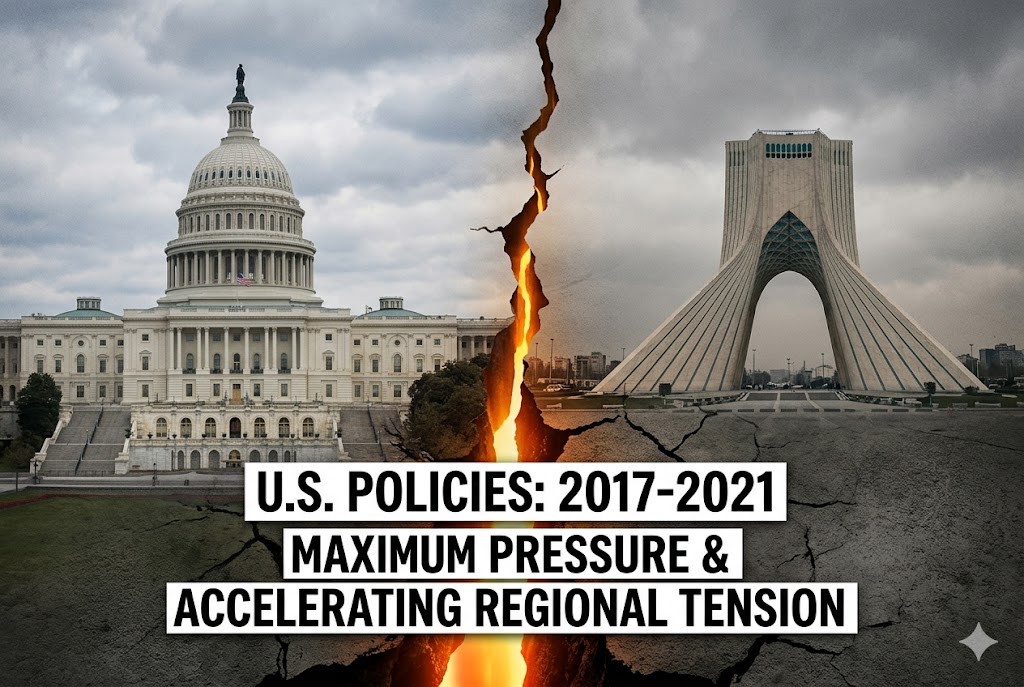
There are mistakes. Then there are strategic miscalculations that reshape an entire region. When you look at Trump’s Iran-Israel war strategy, one error stands taller than all the rest. It is not the timing of the strikes. It is not the messaging. The single biggest thing Trump got wrong is this: he fundamentally underestimated Iran’s will and capacity to survive.
That one miscalculation bled into every decision that followed. It distorted the goals, wrecked the timeline, removed any clear exit strategy, and left the United States stuck in a conflict with no obvious finish line. Let us break this down honestly, plainly, without political spin.
The Assumption That Broke Everything
Trump launched a military campaign against Iran in late February 2026. The stated goals shifted rapidly from nuclear dismantlement to regime change to reopening the Strait of Hormuz. Even supporters of the war grew confused.
According to analysis from the Council on Foreign Relations, the Trump administration appeared to assume that overwhelming U.S.-Israeli military force would produce a quick capitulation. The administration may have taken for granted that combined U.S.-Israeli operations would produce results similar to the Twelve-Day War from June 2025. Or perhaps Trump assumed the response would be muted similar to the reaction after the killing of IRGC General Qasem Soleimani in his first term.
That assumption was catastrophically wrong.
This thinking ignored decades of detailed analysis about the Iranian regime’s core doctrine. The Islamic Republic has been preoccupied with survival since it seized power in 1979. Iran doesn’t have to win militarily. It just needs to outlast U.S. resolve.
This is the central truth Trump’s team missed. And it is the one error from which every other mistake in Trump Iran-Israel war strategy flows directly.
Iran Was Built to Take a Hit
Critics of Trump Middle East policy failure often point to the lack of a post-war plan. That is fair. But the deeper issue is that there was no accurate pre-war understanding of the enemy.
When Trump and Israeli Prime Minister Benjamin Netanyahu started this war, they didn’t have a clear understanding of the nature of the Iranian regime and its defensive capability. They didn’t expect Tehran to counter with an unprecedented level of preparedness striking U.S. bases across the Persian Gulf and hitting Israel hard.
Russia’s Vladimir Putin underestimated Ukraine in 2022. Adolf Hitler underestimated the Slavs in 1941. The latest addition to this list may be Donald Trump, who appears to have underestimated the Iranians in 2026.
This is a pattern that powerful leaders repeat. Conventional military dominance blinds them to asymmetric resolve. Iran’s regime was not built for battlefield glory. It was built for endurance.
Weak states don’t need to win. They just need to not lose to outlast their opponent until it inevitably tires of a non-essential fight where the costs outweigh the benefits. Iran had a good chance of doing exactly that from the moment the war started.
No Plan, No Timeline, No Exit
The flip-flopping that followed the initial strikes revealed the deeper problem. Trump’s team never agreed on what victory actually looked like.
Facing jittery global markets and dropping poll numbers, Trump cycled from calls for “unconditional surrender” to sounding open to an end state where Iran simply swaps one hard-line ayatollah for another. During one speech at a House Republican gathering, Trump went from calling the war a “short-term excursion” to proclaiming “we haven’t won enough.”
Democratic Senator Mark Kelly put it plainly: “They didn’t have a plan. They have no timeline. And because of that, they have no exit strategy.”
This is where Trump Iran conflict criticism from both sides of the aisle finds its sharpest edge. Even Republican hawks grew alarmed.
Senator Ted Cruz said Trump’s decision to strike Iran was the “most consequential” of his second term. But Cruz warned the outcomes looked like a disaster an Iranian regime still run by those who chant “death to America,” receiving billions in relief, able to enrich uranium, and holding effective control over the Strait of Hormuz.
This was not the Democratic opposition speaking. This was the Republican senator from Texas.
The Strait of Hormuz: The Goal That Emerged Mid-War
One of the most glaring signs of poor planning is how the objectives kept changing. At Creative Hives, we tracked this shift closely. Regime change came first. Then came nuclear disarmament. Then the goal pivoted to reopening the Strait of Hormuz a vital trade route carrying over 20 percent of the world’s oil.
Critics questioned Trump’s objectives from the start. The war began with the idea of regime change in Iran, ending the nuclear program, and curbing its missile arsenal. Then another pressing goal imposed itself: forcibly reopening the Strait of Hormuz.
These were not complementary goals. They were competing ones. You cannot pursue regime change while simultaneously trying to negotiate a quick deal to reopen a shipping lane. The contradictions made coherent strategy impossible.
Iran’s ability to choke off trade in the Strait of Hormuz turned out to be a powerful weapon. It forced Trump to scale back his initial agenda of regime change. The current period of ceasefire and negotiations might more accurately be described as a holding action.
Trump vs Iran Latest: The Abraham Accords Gambit
Just when the situation seemed stuck, Trump introduced a new layer of complexity. He linked any Iran deal to Gulf countries joining the Abraham Accords the normalization agreements he brokered during his first term.
Trump signaled he may not agree to end the war with Iran if Saudi Arabia, Qatar, and other countries in the region do not join the Abraham Accords. He argued the Gulf nations “owe that to us.”
The problem? The timing could not be worse. And the demands were unrealistic.
The Abraham Accords were signed in 2020 between Israel and four Arab states Morocco, the UAE, Bahrain, and Sudan. Trump had always envisioned expanding them. But the idea of a massive expansion when the U.S. has not yet secured the opening of the Strait, let alone resolved the nuclear question, stretches credibility.
Saudi Arabia the most significant prize for normalization has insisted that a guaranteed path to a Palestinian state remains a precondition. That is something Israel vehemently opposes. Trump also included Pakistan on his list, which would require a seismic shift in a Muslim nation with already volatile political conditions.
This is a consistent pattern one that led Trump to underestimate Iran as a military adversary and assume its regime would quickly fall.
The Abraham Accords strategy, while bold in concept, is deeply disconnected from the realities on the ground right now.
The Trump-Netanyahu Relationship: Alignment With a Cost
A critical dimension of Trump diplomacy with Iran is the role of Netanyahu. The Trump-Netanyahu relationship is close perhaps too close for Washington’s strategic independence.
The U.S.-Israeli alignment exists alongside fundamental differences in strategic outlooks. Israel’s physical proximity to Iran makes destroying the Iranian ballistic missile program a much higher priority for Jerusalem than for Washington. Israel’s status as the Iranian regime’s principal ideological obsession leads it to prioritize maximalist objectives chief among them an end to the regime in Tehran.
These are not the same goals. The U.S. has global trade interests, alliance obligations, and domestic economic concerns. Israel has an existential threat calculus. Conflating the two produced a war with contradictory endgames.
Netanyahu’s bellicose words are a reminder of one major hurdle to ending the war. Israel has no problem scuttling negotiations by escalating hostilities. The ceasefire is more nominal than real.
When Trump defers entirely to Israel’s maximalist position, he loses the flexibility to cut a deal. That tension defines Trump Israel Iran tensions at this very moment.
What the Experts Said All Along
The warnings were there. Analysts had written about this exact scenario for years. Experts unanimously agree that Trump and his team miscalculated the time required to achieve their goals. Professor Arshin Adib-Moghaddam warned that the war would be “much longer than expected.”
Trump initially suggested the war would last “four to five weeks.” He noted the U.S. has the capability to go far longer but that was framed as confidence, not a warning.
Three months later, the conflict grinds on. The Strait of Hormuz remains disrupted. Iran remains under new leadership but structurally intact. Global oil markets remain rattled. And Trump is still trying to cobble together a deal.
Negotiating an end to the war with Iran has proven the most difficult endeavor of Trump’s second term. U.S. and Iranian officials are working toward an agreement that would trade a reopening of the Strait for an end to the U.S. blockade and a suspension of the war during which nuclear talks could begin. But the details remain deeply contested.
The Strategic Defeat Nobody Wants to Name
The Wall Street Journal’s foreign affairs chief used a phrase that cut through all the noise: strategic defeat of the United States. That phrase did not come from a progressive think tank. It came from one of the most establishment voices in American journalism.
Since launching the war on Iran over one month ago, Trump has faced growing criticism as the consequences of the conflict became apparent described as a “strategic defeat of the United States” by the Wall Street Journal’s foreign affairs chief.
Dania Thafer, the executive director of Gulf International Forum, said Trump is trying to present the war a “strategic failure” as a success for the U.S. and Israel.
The framing mattered enormously. Trump entered the conflict projecting strength. He is now navigating toward a deal that critics from his own party call inadequate. That gap between projection and reality is the clearest sign of what went wrong.
The Pattern: Impulse Over Strategy
At Creative Hives, we believe the honest answer to this question requires looking at a behavioral pattern, not just one decision. Throughout Trump’s handling of this conflict, the underlying issue has been consistent: impulse over strategy.
Expert David Mednicoff cautioned early on against strong predictions of Trump’s decisions. He stated clearly that “the president tends to act on impulse.”
Impulse works in negotiation. It can work in business. It rarely works in prolonged military campaigns where doctrine, logistics, and geopolitical patience determine outcomes. Iran has doctrine. Iran has patience. Iran has a survival instinct baked into its governmental structure since 1979.
Trump came in hot. Iran waited him out. That dynamic more than any single tactical decision defines what went wrong with Trump Iran-Israel war strategy.
What a Better Strategy Would Have Looked Like
To be fair, this is not just criticism for its own sake. A better approach to Trump diplomacy with Iran would have included:
Clear and non-shifting objectives. Either you want a nuclear deal, or you want regime change. You cannot effectively pursue both simultaneously. Every week the goal shifted, Iran gained negotiating leverage.
An exit strategy built in from day one. As Senator Kelly said no plan, no timeline, no exit. Military action without a defined off-ramp is a trap. The U.S. walked into that trap with eyes open.
Realistic regional diplomacy. Demanding that Saudi Arabia, Qatar, and Pakistan join the Abraham Accords mid-war is not diplomacy. It is wishful thinking dressed up as leverage. These countries have their own domestic politics and their own red lines.
Respect for Iranian resolve. This is the hardest one politically, because acknowledging your enemy’s resilience is never popular. But every serious Middle East analyst had flagged Iran’s survival doctrine for decades. Ignoring that intelligence is not strength it is negligence.
Where Things Stand Now
As of late May 2026, the situation remains volatile. Trump insists Iran is “negotiating on fumes” and that November’s midterm elections will not push him to rush a deal. A framework is reportedly close Iran gives up its enriched uranium stockpile in exchange for sanctions relief and an end to the U.S. naval blockade.
But the details are still being fought over. Some Republican senators have warned strongly against any deal that leaves Iran’s political leadership intact or gives them access to billions in frozen assets.
Meanwhile, the ceasefire remains nominal. The U.S. resumed bombing Iranian naval bases even as negotiations continued. Israel threatened further escalation in Lebanon.
This is not a victory lap. This is a messy, painful search for an exit from a conflict that did not need to look like this.
Final Verdict: The One Thing Trump Got Most Wrong
The answer is not complicated. Trump got most wrong about the Iran-Israel conflict by treating Iran like a regime that would fold under military pressure. He missed or chose to ignore the foundational truth that Iran’s government was architected to resist exactly this kind of attack.
Everything else flowed from that mistake. The shifting goals. The absent exit strategy. The over-ambitious Abraham Accords play. The tension with Netanyahu. The confused messaging. The economic blowback.
For all their claims of military success, the United States and Israel have yet to clearly define their rationale for starting the conflict, their goals, and their exit strategy. The Middle East has been plunged into an unnecessary confrontation with no end in sight.
The Trump Iran conflict criticism you hear from analysts, from Republican senators, and from foreign policy experts is not partisan noise. It is an honest accounting of what happens when the most powerful military in the world acts without a doctrine for what comes after.
Creative Hives will continue tracking how this story develops. The Iran-Israel conflict is still unfolding. But the core mistake the underestimation of an adversary built to survive is already a defining lesson of this era. Leaders who ignore the history, doctrine, and resilience of their enemies do not win. They just make the eventual compromise more expensive.
And that cost is being paid right now in oil prices, in geopolitical trust, and in American credibility across the Middle East.
This article was researched and written by the editorial team at Creative Hives. All analysis reflects publicly available reporting and expert commentary as of May 2026.