grad plus loans ending: 7 facts about the biggest change to graduate school financing in 20 years
Starting July 1, 2026, graduate and professional students lost access to a federal loan program that has funded American graduate education for two decades. The grad plus loans ending marks one of the most significant shifts in higher education financing in recent memory, and the fallout is only beginning to become clear.
Here is what actually changed and what it means for anyone considering graduate school.
what grad plus loans actually did
Before understanding the grad plus loans ending, it helps to understand what the program provided. For 20 years, the Federal Direct Graduate PLUS Loan program allowed graduate and professional students to borrow up to their full cost of attendance, minus other financial aid, directly from the federal government. Students could cover tuition, housing, and living expenses for medical school, law school, PhD programs, and other advanced degrees without turning to private lenders, at fixed federal interest rates with federal borrower protections.
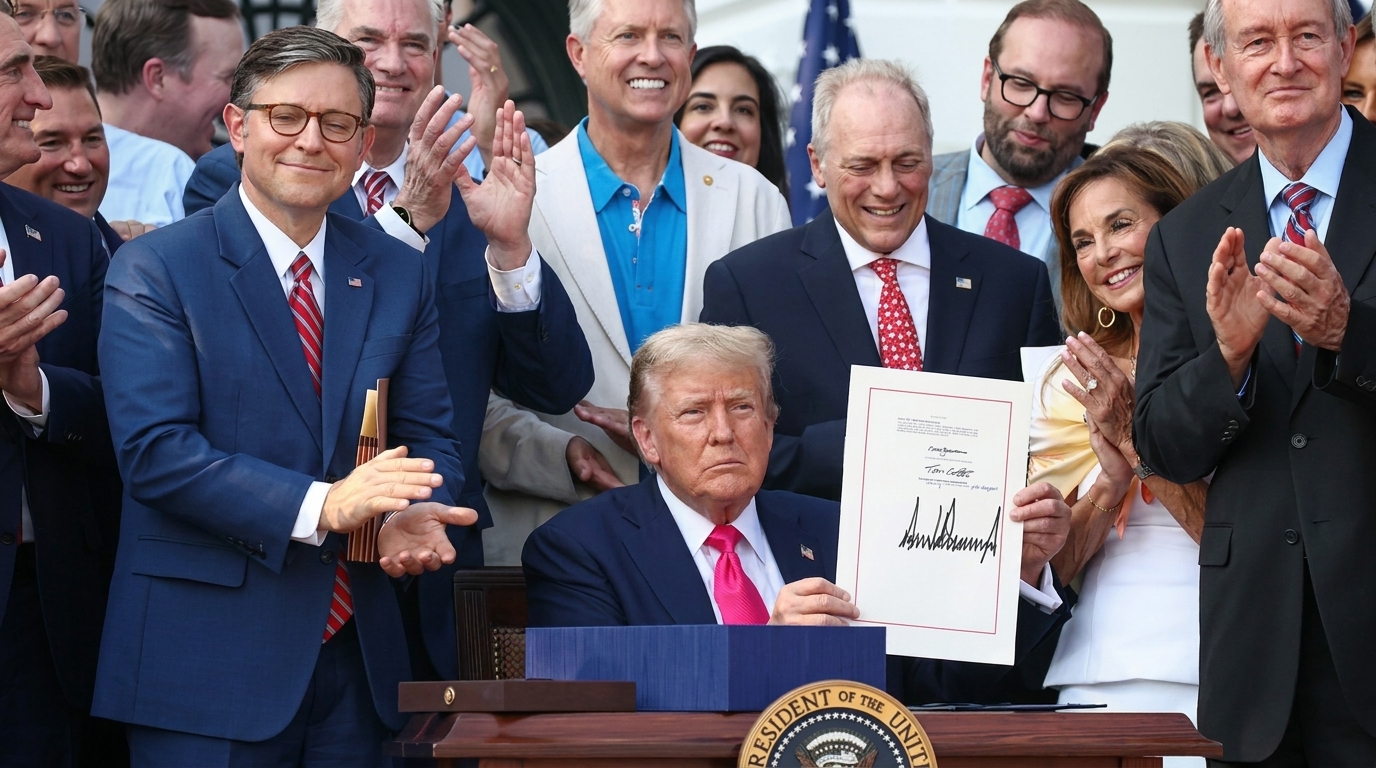
That program is now closed to new borrowers as a direct result of the One Big Beautiful Bill Act, passed by Congress in July 2025, with the grad plus loans ending taking effect exactly one year later.
the new borrowing caps that replace it
In place of the old system, new federal borrowing limits took effect July 1. Graduate students in standard programs can now borrow up to $20,500 per year through Direct Unsubsidized Loans, with a $100,000 lifetime limit for the degree. Students in what the Department of Education defines as “professional” programs expected to primarily include Medicine, Law, Dentistry, and similar degrees can borrow up to $50,000 per year, with a $200,000 lifetime limit.
Critically, the grad plus loans ending also introduced a hard aggregate lifetime cap of $257,500 across all federal borrowing, undergraduate and graduate combined. Once a borrower reaches that number, no additional federal student aid is available, regardless of program cost.
who still gets the old rules
Not every graduate student is immediately affected by the grad plus loans ending. A legacy provision protects students who received a federal Direct Unsubsidized or Grad PLUS loan disbursement before July 1, 2026, and who remain enrolled in the same program at the same institution. Those students can continue borrowing under the old rules for up to three additional years, or until they complete their program, whichever comes first.
Students starting a new graduate or professional program after July 1, changing institutions, or switching degree programs do not qualify for this protection and are immediately subject to the new, lower caps with no Grad PLUS option to fill the gap.
why private lenders will likely reject many applicants
The most alarming dimension of the grad plus loans ending involves what happens to students who need to borrow beyond the new federal caps.
An analysis published in March by Protect Borrowers and The Century Foundation examined the underwriting criteria of 38 private student loan lenders. The findings were stark: more than 40% of Americans would likely be denied by most traditional, prime private lenders due to credit and income requirements. Many lenders required a minimum credit score of 670 and a minimum income of $35,000 a bar that many recent college graduates cannot clear, given that the average credit score for someone in their 20s is 662, according to Chase.
“We cannot assume the private market will step in to fill federal loan gaps,” said Carolina Rodriguez, director of the Education Debt Consumer Assistance Program in New York, in comments about the grad plus loans ending and its aftermath.
what happens to students who do get approved
For students who do qualify for private loans following the grad plus loans ending, the terms differ substantially from what federal borrowers were used to. Private student loan interest rates from lenders like Earnest currently range from roughly 3.47% to 16.85% APR depending on the borrower’s credit profile, compared to the single fixed rate federal Grad PLUS borrowers received regardless of credit history.
Private loans are also fundamentally different in terms of protections. Only about half of private lenders discharge a borrower’s debt if they become disabled or die, according to higher education expert Mark Kantrowitz. In cases where a loan has a cosigner, unpaid debt can pass to that cosigner, and without one, it can become a claim against the deceased borrower’s estate. Federal loans, by contrast, are automatically discharged upon death or total disability in nearly all cases.
why experts predict the private loan market will double
Higher education finance experts have been direct about the scale of the shift the grad plus loans ending is expected to trigger. “I estimate that private student loan volume may double due to the loan limit changes,” Kantrowitz said. Currently, students borrow roughly $10 billion annually in private student loans nationwide a figure expected to climb significantly as graduate students who previously relied on Grad PLUS seek alternatives.
Major lenders have already signaled they are preparing for the shift. Navient and SoFi have both disclosed to Congress that they are positioning for increased demand for private student loans in the wake of the grad plus loans ending.
Anna Anderson, a staff attorney at the National Consumer Law Center, expressed concern about what this means for borrowers: “We’re concerned that the loans will be expensive and higher risk for borrowers.”
what this means for who can actually attend graduate school
The practical effect of the grad plus loans ending, according to Kantrowitz, is that some prospective graduate students will respond by enrolling in lower-cost programs, while others will discontinue their education plans altogether if they cannot secure adequate financing.
The Trump administration has defended the change, stating in January that unrestricted federal borrowing had led to “steep increases in graduate school tuition” an argument that the previous system’s unlimited borrowing capacity gave universities little incentive to control costs. Critics counter that eliminating the loan option does not address tuition costs directly, but instead shifts financial risk onto students least equipped to absorb it.
A federal court has already temporarily halted part of the rollout related to how the Department of Education defines “professional degree” programs, meaning even the full scope of the grad plus loans ending remains partially unsettled as of this reporting.
Sources: CNBC, Fastweb, Earnest, College Aid Pro, Georgetown University Office of Student Financial Aid June to July 2026